

 Pillar Quinn |
 Antonis Papathanasiou |
Dec 2024
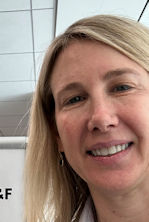
We had five incumbents and two new people running for seven open slots on the Board, so a formal election by the membership was not required. We welcome new board members Pillar Quinn and Antonis Papathanasiou. Pillar lives in Everett, WA (U.S.), and Antonis lives in Greece. Photos above.
Five incumbent board members were up for re-election, and will serve another two years. They are Andrew Cowen, James Fadden, Leslie Head, Lynn McGovern, and Alexandra Wharton. Three more have terms expiring next year: Samuel Bearg, Sarah Hazelwood, and Peter Mansbach. Photos and locations are at circadiansleepdisorders.org/aboutus.php#BofD
Maggie Leppert chose not to run again, and resigned from being secretary. We wish her well.

Dec 2024
The NIH Sleep Disorders Research Advisory Board (SDRAB) meeting was held on December 4, 2024 with CSD-N Vice President Alex Wharton (photo at left), our SDRAB representative, in attendance. The one-day meeting was replete with updates and discussions about circadian rhythm research.
SDRAB Chair and Director of the University of Chicago Sleep Center, Dr. Esra Tasali, explained that sleep medicine and circadian medicine are intersecting - and that trainees should be educated on both of these interrelated biologies. She also stressed the importance of scientists reporting on circadian markers when conducting sleep research.
Dr. John Hogenesch, geneticist, professor of pediatrics at the Cincinnati Children's Hospital and president of The Society for Research on Biological Rhythms, described SRBR's interests and activities. The international society advocates for policies that take biological rhythms into account to improve human health including permanent standard time, later school start times and chronotherapy (timing of medications). He explained that up to 25% of all medications could be improved by timing and that medication should be administered based on a person's internal circadian rhythms to maximize effectiveness.
Alex asked Dr. Hogenesch how CRD sufferers could access genetic testing specifically for the human circadian clock gene CRY1, which is associated with a familial form of DSPD in 1 in 75 individuals with non-Finnish European ancestry. A mutation in CRY1 alters the human circadian clock, and carriers of the gene variant experience an intractable delay of sleep onset compared to non-carriers. Genetic testing could improve diagnosis for people living with CRDs as we struggle to "prove" the conditions are physiological and not psychological.
For the Sleep Research Coordinating Committee presentation, Dr. Michael Sesma, an NIH health science administrator, presented a portfolio of work of several labs across the country that are studying various aspects of circadian rhythms. Here are some of highlights from Dr. Sesma's talk.

Oct 2024
On October 28 and 29, 2024, Circadian Sleep Disorders Network Vice President Alexandra Wharton attended the fifth annual Sleep Advocacy Forum and Hill Day in Washington, DC.
This year's Forum - facilitated by Project Sleep - brought together patients, policymakers and sleep community leaders to address critical issues in sleep health. Speakers included Dr. Marishka Brown, director of the NIH National Center on Sleep Disorders Research, who discussed emerging opportunities in circadian research. Josh Andrews, a retired NFL offensive lineman, spoke about his experience playing professional football while living with narcolepsy.
On Hill Day, attendees from 42 patient advocacy organizations and professional societies divided into seven teams. These teams conducted more than 50 meetings with legislative staff about the need to elevate awareness of sleep disorders - especially among school nurses, teachers and students. Alexandra was part of a team (photo above) that visited several Texas congressional offices including U.S. Representative Lloyd Doggett. She is second from the left.
Oct 2024
Circadian Sleep Disorders Network will be holding elections for its Board of Directors. Requirements are described here.
Meetings are held by online forum, so you can log in at any time of day (typically once a day) to read what's been posted and post your replies. Meetings do continue for two months or more, though often not very actively.
If you're interested, please let us know soon (latest Nov 10), following the instructions at the end of the above document. Directors start serving January 15, 2025. Terms generally run for two years.
We are also often looking for other volunteers willing to help. These can be board members but do not have to be. If you're interested in volunteering, please let us know, including any skills you have.
 |
 |
Sept 2024
The Board of Directors is pleased to announce the election of Alexandra Wharton as Executive Vice President, and Maggie Leppert as Secretary, to fill these vacancies. Their terms run to Jan 2026. Congratulations!

June 1-5, 2024
From June 1 through 5, SLEEP 2024 was held in Houston, Texas. It's the annual conference of the Associated Professional Sleep Societies (APSS) - a joint venture of the American Academy of Sleep Medicine (AASM) and the Sleep Research Society (SRS).
Five thousand sleep professionals and patients attended the conference, which is dedicated to clinical sleep medicine and sleep and circadian research.
Circadian Sleep Disorders Network exhibited in SLEEP's Advocacy Pavilion with the booth (photo above) staffed by board members Leslie Head and Alexandra Wharton (photo below). They were encouraged by the level of interest in circadian rhythm sleep disorders and in our organization.
Dozens of sleep professionals and graduate students visited the booth and took copies of our patient survey results paper, Registry and Survey of Circadian Rhythm Sleep-Wake Disorder Patients, and our brochure. Several attendees suggested physicians and researchers with whom CSD-N should collaborate.
The panel entitled Legal Issues in Sleep Medicine focused primarily on the issue of drowsy driving. Though criminal prosecutions for driving drowsy are rare, some states can still interfere with a sleep patient's ability to obtain and maintain a driver's license. As an example, individuals in Virginia with "narcolepsy and sleep disorders" may be required to provide a letter from their doctor that their condition is well controlled before being issued a driver's license. The definition of "sleep disorders" in Virginia has been expanded to include sleep apnea, where individuals may be required to demonstrate that they use their CPAP machines regularly. It is unclear whether circadian rhythm disorders would be included as a "sleep disorder" under the Virginia statute.
During the plenary session on June 3, Julie Flygare, president and CEO of Project Sleep, accepted the Sleep Research Society's Public Service Award. In Julie's speech, she discussed the importance of including patient voices and perspectives in scientific and clinical research to advance progress.
There were more than 100 sessions; several were focused on circadian rhythms including Circadian Rhythms - From Genes to Populations, Leveraging Sleep Medications, EHR-Defined Disorders and Sleep Health Traits to Advance Sleep and Circadian Genetics and Dr. Elizabeth Klerman's Adding Sleep and Circadian Rhythms to Medicine.

Leslie Head and Alexandra Wharton at SLEEP 2024

May 2024
The board of Directors of Circadian Sleep Disorders Network welcomes its newest member, Maggie Leppert. Maggie was appointed by the Board to fill a vacant slot, and to assist the secretary.
 |
 |
Apr 4, 2024
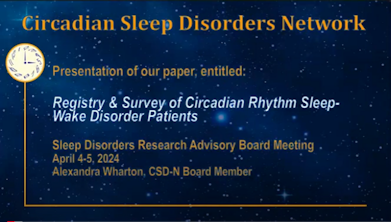
The NIH's Sleep Disorders Research Advisory Board (SDRAB) met on April 4 and 5, 2024 in Bethesda, Maryland. The purpose of the meeting was to update the advisory board and public stakeholders on the progress of sleep and circadian research activities across NIH, and the activities of federal stakeholders and interested organizations.
Alexandra Wharton, CSD-N's representative on SDRAB, traveled to the meeting to present our recently published paper, Registry and Survey of Circadian Rhythm Sleep-Wake Disorder Patients. In her 15-minute talk, she highlighted survey results regarding diagnosis, tiredness, work impact, co-morbidities and treatments. You can view the talk here (talk with slides), or the slides only here (slides only).
She emphasized that Circadian Rhythm Sleep-Wake Disorders (CRSWDs) have a devastating effect on the lives of patients and that these conditions should be considered physiological — not psychological — conditions.
CSD-N's patient survey found that 24% of patients took 10 or more years to receive accurate diagnosis and that 77% were misdiagnosed initially — many with multiple incorrect diagnoses over the years.
Many of our survey respondents reported that their sleep disorder preceded their depression, suggesting that the sleep disorder may have caused the depression rather than the depression causing sleep problems as commonly diagnosed.
The presentation was well received. Findings about the prevalence of sighted non-24, the ineffectiveness of light therapy and the dangers of phase-delay chronotherapy were of special interest to attendees.
Alexandra urged for earlier diagnosis for CRSWDs, asking about best practices for screening patients. For example, she asked the group of clinicians and researchers if it could be possible to routinely administer the Munich Chronotype Questionnaire along with the Epworth Sleepiness Scale at a patient's initial appointment.
She also touched on the potential of DNA testing to help diagnose CRSWDs, although it is not yet widely available.
Several other talks at the meeting were focused on the importance of sleep for maternal health and pregnancy:
Dr. Erik Herzog, biology professor and lab director at Washington University in St. Louis, gave a talk entitled Time to Deliver: Maternal-Fetal Circadian Communication. He explained that there is little known about how the fetus entrains to the mother and how this might impact gestation length. Studying daily rhythms of maternal and placental signals and their roles in birth timing has the potential to translate into clinical care for healthy pregnancies.
Dr. Christina Park, officer for the NIH's Environmental influences on Child Health Outcomes (ECHO) program, described that ECHO's goal is to investigate how environmental exposures early in life — including biological, social, behavioral, natural, and built environments — affect child health and development. ECHO focuses on five key pediatric outcomes that are intertwined with sleep: pre- and post-natal outcomes, upper and lower airway, obesity, neurodevelopment and positive health.
Dr. Gina Wei, senior scientific advisor on women's health with the NHLBI, presented, Women's Health and Maternal Health Research: Opportunities for Sleep Science. She examined risk factors that may affect a woman's likelihood for coronary heart disease. These factors include hormonal changes, high blood pressure, diabetes and lack of physical activity and sleep.
Feb 2024
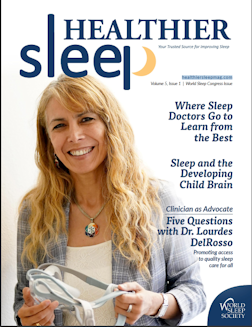
Circadian Sleep Disorders Network is featured as the "Patient Organization Highlight" on page 17 of the latest issue (Vol 5 Issue 1) of Healthier Sleep Magazine, published by the World Sleep Society.
Jan 2024
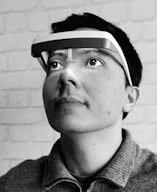
Member Stephen Larroque was interviewed for an article on his experience with Non-24 in Zeit Wissen magazine. An audio podcast, Der Mann ohne Zeit (the man without time), with him and two research doctors, is available here in the green box near the top of the page. Stephen's comments are in English, but the interviewers and doctors are speaking in German. Note that the text on the web page above is not taken from the interview
Jan 2024
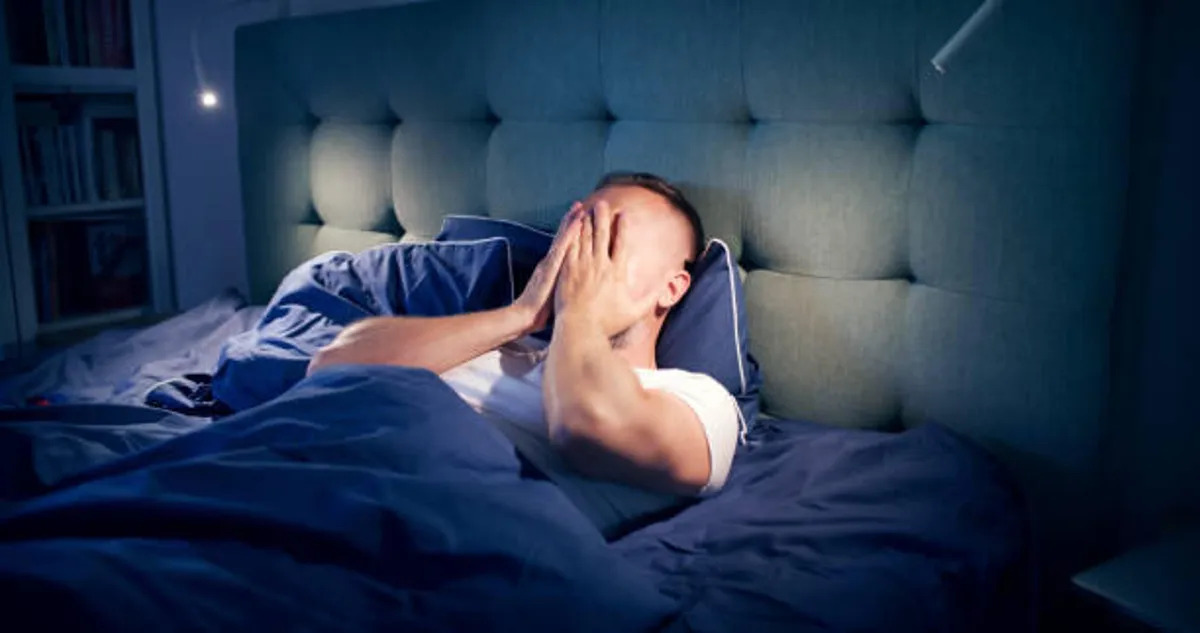
Our president, Peter Mansbach, and board member Alexandra Wharton were interviewed for this article about Delayed Sleep Phase Syndrome (DSPS):
Delayed Sleep Phase Syndrome: Why Your Internal Clock Keeps You Up at Night, by Arielle Burton (CNET Jan 24, 2024). We don't agree with everything in the article, but it is sympathetic and helps raise awareness.
Archived News 2023
Archived News 2022
Archived News 2021
Archived News 2020
Archived News 2019
Archived News 2018
Archived News 2017
Archived News 2016
Archived News 2015
Archived News 2014
Archived News 2013
Archived News 2011 - 2012 (incomplete)
