
Circadian Sleep Disorders Network is an independent nonprofit organization dedicated to improving the lives of people with chronic circadian rhythm disorders.
We aim to increase awareness within the medical community and among the general public, to provide emotional support and practical ideas for people living with these disorders, to inform patients and health care providers about treatment options, to encourage research into circadian rhythms, and to advocate for accommodations in education and employment for people with circadian rhythm sleep disorders.
Note that Circadian Sleep Disorders Network is not affiliated with any pharmaceutical, medical device, or other company.
Circadian Rhythm Sleep Disorders (CRSDs or CRDs) are neurological disorders in which the sleep-wake cycle is out of sync with the day-night cycle. These include in particular Delayed Sleep Phase Disorder and Non-24-Hour Sleep-Wake Disorder. Also included are Advanced Sleep Phase Disorder, Irregular Sleep Wake Disorder, and Shift Work Disorder, which are defined here.
Delayed Sleep Phase Disorder (DSPD), also called Delayed Sleep Phase Syndrome (DSPS), is characterized by an inability to fall asleep until very late at night, with the resulting need to sleep late in the morning or into the afternoon. Questions? See our DSPS Q&A.
Advanced Sleep Phase Disorder (ASPD), also called Advanced Sleep Phase Syndrome (ASPS), is the opposite. It is characterized by falling asleep very early in the evening, and waking up in the wee hours of early morning, unable to sleep further.
Non-24-Hour Sleep-Wake Disorder (Non-24), also called Free-Running Disorder (FRD), is a condition in which a person's day length is significantly longer than 24 hours, so that sleep times get later each day, cycling around the clock in a matter of days or weeks. Questions? See our Non-24 Q&A.
Some people use the term reverse sleep, referring to the fact that sometimes people with DSPD and Non-24 end up sleeping during daylight and being awake at night.
Please refer to our descriptions,
definitions, and
treatments pages for more details,
and print out our brochure,
fact sheet,
and/or Q&A documents to give to others.
We can progress toward our mission of promoting awareness and accommodation only if we can demonstrate that we represent a community of people who suffer from these disorders. Please join now, so we can better help you and the CSD community in achieving our common goals. Together we have a voice! More details are on the Join page.
Last year's members: if you haven't renewed yet, please do so now. Renew now!
We are a 501(c)(3) organization based in the U.S., serving the global circadian sleep disorders community. We are a patient organization, entirely supported by member dues and contributions. We are all unpaid volunteers.
Circadian Sleep Disorders Network has launched its PATIENT POWERED REGISTRY AND SURVEY for people with Circadian Rhythm Sleep Disorders. The registry is open to anyone with a circadian rhythm sleep disorder from any country. You can sign up for the registry and
take the survey (called a "Patient Insights Network ®") at
CircadianSleepDisorders.org/survey. It's free.
By collecting information from a large number of people actually suffering from these disorders, we can stimulate research into causes, treatments, and effects of circadian disorders.
We often complain that so little research has been done on people suffering with Circadian Rhythm Sleep Disorders. One reason is the difficulty researchers have in locating people with these disorders. Well, this is your chance! You can make a difference!
The information you provide can jump-start research on some of the questions we've been asking about for years - but only if enough people participate. You can also optionally allow researchers to contact you to participate in studies. Sign up now (free), and please take the survey.
Note that the signup questions that you get first are not the survey! Part of the signup process with Invitae (the registry host) involves answering two pages of demographic questions like age, gender, race, etc. That is not our survey.
After you've finished signing up you will be taken to our survey, called "Circadian Rhythm Sleep Disorders", which asks about your circadian disorders, sleep habits, treatment, and other disorders. Our survey has multiple pages. The actual number is dependent on how you answer some key questions. Please be sure to complete the entire survey. Otherwise, your responses will not be used in analysis.
For more information, and to review the survey instructions and definitions, click here.
Researchers: You can view the survey questions without taking the survey here. You can request participants to contact you for further research by contacting
Invitae PIN (Patient Insights Network) (website)
or emailing Circadian Sleep Disorders Network at  for further information.
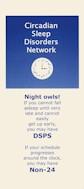 We are asking our members and followers to give our brochure, and/or our Q&A booklets, to their sleep doctors
and their general doctors on their next visits.
It is vital to all of us suffering from circadian disorders that more doctors and their support staff understand these disorders and how disruptive they can be.
The more doctors who know about us, the more patients we can reach, inform, and support. And the larger our membership, the more credible our voice on behalf of all people with circadian sleep disorders.
We are asking our members and followers to give our brochure, and/or our Q&A booklets, to their sleep doctors
and their general doctors on their next visits.
It is vital to all of us suffering from circadian disorders that more doctors and their support staff understand these disorders and how disruptive they can be.
The more doctors who know about us, the more patients we can reach, inform, and support. And the larger our membership, the more credible our voice on behalf of all people with circadian sleep disorders.
You can print out the brochure on U.S. letter paper
(8½x11) or on A4 paper (non--U.S.).
Booklets can be printed for DSPS or for
Non-24 (the same file can be printed on either U.S. or A4 paper).
Alternatively you can email us at
to request a printed copy of any or all these documents (please specify which, and how many you really need).
Be sure to include your name and full postal address. We will send these at no charge to you.
Feb 2024
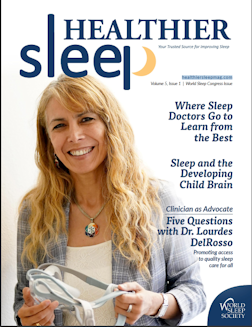
Circadian Sleep Disorders Network is featured as the "Patient Organization Highlight" on page 17 of the latest issue (Vol 5 Issue 1) of Healthier Sleep Magazine, published by the World Sleep Society.
Jan 2024
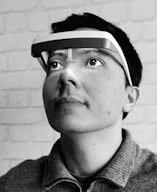
Member Stephen Larroque was interviewed for an article on his experience with Non-24 in Zeit Wissen magazine. An audio podcast, Der Mann ohne Zeit (the man without time), with him and two research doctors, is available here in the green box near the top of the page. Stephen's comments are in English, but the interviewers and doctors are speaking in German. Note that the text on the web page above is not taken from the interview
Jan 2024
Our president, Peter Mansbach, and board member Alexandra Wharton were interviewed for this article about Delayed Sleep Phase Syndrome (DSPS):
Delayed Sleep Phase Syndrome: Why Your Internal Clock Keeps You Up at Night, by Arielle Burton (CNET Jan 24, 2024). We don't agree with everything in the article, but it is sympathetic and helps raise awareness.
Dec 2023
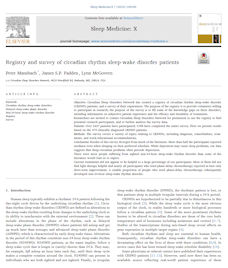
The online version of our manuscript (see next article) is now publicly available (and open source) at doi.org/10.1016/j.sleepx.2023.100100. It is titled Registry and Survey of Circadian Rhythm Sleep-Wake Disorder Patients. Authors are Peter Mansbach, James Fadden, and Lynn McGovern. Published in Sleep Medicine:X, Vol 7.
A PDF of what the printed version will look like is available by clicking View PDF at the top of the online version. A blurred image is at left. It appears that the printed journal will not be printed for some time.
Highlights (quoted from the article):
Dec 2023
 Our manuscript has been accepted for publication by Sleep Medicine:X (the "X" means the article is open access and will be available without charge). It is titled Registry and Survey of Circadian Rhythm Sleep-Wake Disorder Patients. Authors are Peter Mansbach, James Fadden, and Lynn McGovern. Publication date has not been announced.
The article discusses the purpose of the registry and survey and how it was structured. It presents some statistical results from the survey, and the conclusions we draw from that. It calls into question several assumptions made by doctors in the past.
It took altogether 7 years, from when we first created the survey questionnaire to final acceptance. This included waiting for a large enough number of respondents, then analyzing the responses, writing and editing the manuscript, and responding to reviewers.
Thanks to the many circadian rhythm sleep disorders sufferers who participated in the survey - more than 1600 as of when we analyzed the data for this paper. Note that the survey is still open (www.CircadianSleepDisorders.org/survey), and new participants will be included in our next analysis.
Dec 2023
 We have been asked to post a clinical study of advanced and delayed sleep (called Circadia) to the CSD-N site for recruitment purposes. Circadia is an online research study to understand circadian rhythm disorders and they are looking for people diagnosed with circadian rhythm disorders to join our completely remote, at-home study. You will be paid. More info can be found on the study website: https://lanelab.bwh.harvard.edu/circadia-study/
Nov 24, 2023
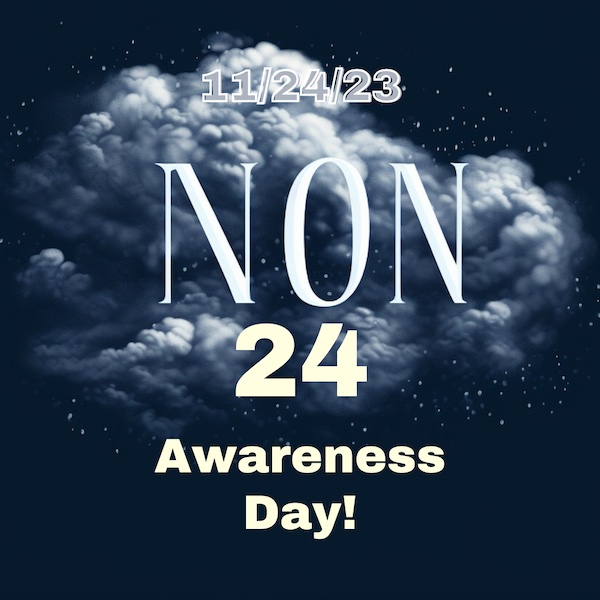
On Nov-24 we celebrate Non-24 Awareness Day! This day is dedicated to raising awareness about Non-24 sleep-wake disorder, a circadian rhythm disorder that causes sleep patterns to be out of sync with the 24-hour day. Non-24 can have a major impact on quality of life, but it is often misunderstood and underdiagnosed. Join us in spreading the word and helping people with non-24 get the support they need!
For more information see our Non-24 Q&A.
Nov 2023
Circadian Sleep Disorders Network opened nominations for the Board of Directors in October. Three incumbents whose terms were expiring - Samuel Bearg, Sarah Hazelwood, and Peter Mansbach - were re-nominated. A fourth vacant slot was available, but nobody volunteered to run before the Nov 10 deadline.
Per the Bylaws, since there were not more candidates than open slots, there was no requirement to conduct a formal election, and the three incumbents were deemed re-elected.
There are six additional incumbents whose terms were not expiring, for a total of nine board members.
Oct 2023
Circadian Sleep Disorders Network will be holding elections for its Board of Directors. Requirements are described in www.circadiansleepdisorders.org/docs/ReqDir.php.
Meetings are held by online forum, so you can log in at any time of day to read what's been posted and post your replies. Meetings do continue for two months or more, though often not very actively.
If you're interested, please let us know soon (latest Nov 10), following the instructions at the end of the above document. Directors start serving January 15, 2024. Terms generally run for two years.
We are also often looking for other volunteers willing to help. These can be board members but do not have to be. If you're interested in volunteering, please let us know.
 June 17, 2023
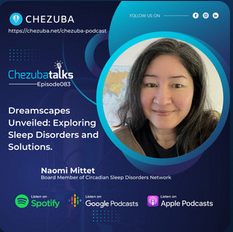
On June 17 Naomi Mittet, our secretary, was interviewed on the Chezuba Talks podcast with Tej Patil. She discusses her life as a DSPD parent caring for her Non-24 child.
Listen to the interview here. Chezuba describes:
"In this enlightening episode of Awake and Aware, join host Tej as she delves into the world of circadian rhythm sleep disorders with expert guest Naomi Mittet. As an advocate for those affected by these disorders, Naomi sheds light on the challenges faced by individuals with non-24 sleep-wake disorder and delayed sleep phase disorder. Together, they explore the impact of these disorders on physical, mental, and emotional well-being, while discussing the importance of recognition, diagnosis, and treatment."Chezuba's mission is to empower companies to make a difference, including matching corporate volunteers with nonprofits.
 Several days later Naomi was interviewed on Handi-Link with Cam Wells of CJAM radio. Handi-Link is a series of interviews focused on disability issues. As the interviewer notes, poor sleep makes all disabilities worse.
You can listen to this interview
here. Click in the circle at bottom to listen. Naomi's portion starts at 1124 (you can click on the outside circle to jump ahead).
 June 3 - 7, 2023
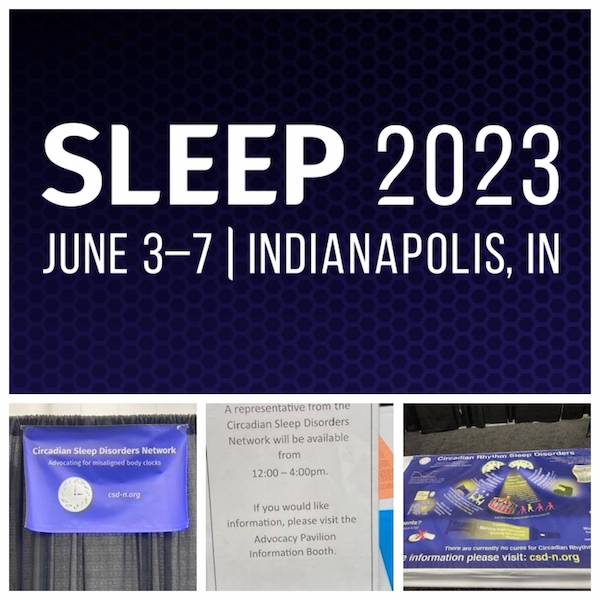
Thirty-five hundred sleep professionals converged on Indianapolis the first week in June to learn about the latest research and treatments for sleep disorders at the SLEEP2023 conference.
Circadian rhythms were a major topic of discussion, and CSD-N was there with its own booth in the "Advocacy Pavilion" of the exhibit area, staffed by CSD-N board member Leslie Head. Conference rules require someone to be present at the booth all day, which doesn't work for those of us with circadian rhythm sleep disorders. Leslie appealed to the organizers, pointing out the irony of a sleep conference excluding people with our sleep disorders. They allowed her to be present part time, and provided a sign to that effect. (Photos above show our banners and the sign.).
Dr. Phyllis C. Zee, a member of the CSD-N Medical Advisory Board, delivered the conference keynote address entitled Bridging Circadian and Sleep Science to Enhance Healthspan. Alex Wharton, another CSD-N board member, prepared a well-received presentation for a Patient Advocacy Panel that discussed How Health Disparities, Lack of Awareness, and Payer Policies Ultimately Impact the Patient.
Leslie distributed brochures at the CSD-N booth and spoke with researchers from Harvard and Stanford who are searching for biomarkers in blood samples of DSPD patients, as well as a researcher from the University of Nevada at Reno who is studying the pupils of DSPD patients to gauge their reactivity to light. Several physicians asked for us to design a brochure that they could present to newly diagnosed circadian rhythm patients. We'll be following up on that.
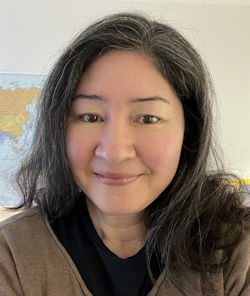 April 2023
The CSD-N Board of Directors is pleased to announce the election of board member Naomi Mittet as Secretary. She replaces Samuel Bearg, who resigned for personal reasons. We thank him for his service.
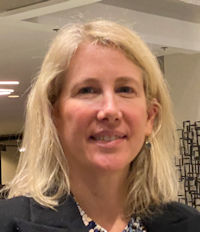 April 6-7, 2023
CSD-N board member Alexandra Wharton is serving on the NIH SDRAB (Sleep Disorders Research Advisory Board) representing the circadian rhythm sleep disorders patient community.
SDRAB is a Federal Advisory Committee established by legislation in 1993 to provide advice on matters related to research in sleep health and disorders.
Its mission includes improving sleep disorder diagnoses, quantifying the benefits of treatment, and elucidating molecular and genomic biomarkers suitable for use in screening.
A number of researchers gave presentations at the meeting April 6 - 7, and Alexandra spoke up several times to urge additional consideration of circadian rhythm sleep disorders. She also urged research on potential circadian rhythm influences other than light.
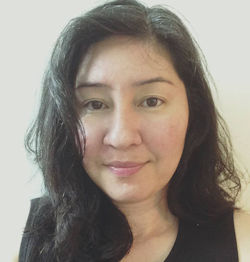 Feb 2023
The CSD-N Board of Directors is pleased to announce the appointment of board member Naomi Mittet as Newsletter Editor. She hopes to publish the next edition soon.
Mar 2023
And here it is!
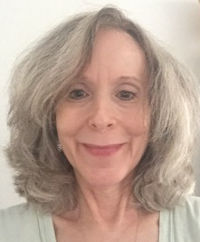 Leslie Head |
 Naomi Mittet |
Jan 2023
CSD-N welcomes two new board members, Leslie Head and Naomi Mittet. They begin serving their two-year terms on Jan 15.
Leslie has a law degree and worked as a corporate attorney until her DSPD caught up with her.
Naomi has a daughter with sighted Non-24, which led her to discover that she herself has DSPD. They are both eager to help with our goals of raising awareness of and encouraging reseach into these disorders.
Four current board members have also been re-elected: Andrew Cowen, James Fadden, Lynn McGovern, and Alexandra Wharton. Four other directors have terms which don't expire until next year.
This is a free mailing list support group for people with DSPS and Non-24 to share their experiences. It's a good place for people just discovering these disorders to hear how others deal with them, as well as for long-time participants to get support and to provide support to others. There are often discussions of evolving treatment, useful to all. For further information, and to sign up, go to www.circadiandisorders.org/list.
Note that membership in Circadian Sleep Disorders Network and membership on this email list are completely separate.
Circadian Sleep Disorders Network is affiliated with this email list, and our volunteers assist the list administrator with some chores. CSD-N was formed by participants on this list, and many of our members post regularly. But we have no control over what appears or who can join, and list membership is completely separate from membership in CSD-N.
Once you've signed up for the list, you post by sending an email to

 Everyone on the mailing list receives that post as an email, and you receive everyone else's posts as emails. If you don't like to get separate emails, you can opt to receive in digest form, typically one email a day containing all the day's posts. You make that selection after signing up by logging in (using the password you created when signing up for the email list) at
www.circadiandisorders.org/list.
Everyone on the mailing list receives that post as an email, and you receive everyone else's posts as emails. If you don't like to get separate emails, you can opt to receive in digest form, typically one email a day containing all the day's posts. You make that selection after signing up by logging in (using the password you created when signing up for the email list) at
www.circadiandisorders.org/list.
There are some rules:
The rules that the list software enforces are
An additional rule is PLEASE do not just reply to a message with a subject line containing "Niteowl Digest, Vol xxx, Issue xxx". That is obviously not informative and if you aren't careful you may include the whole list of messages in the Digest, making your message too large for the list.
Digest or not, it is a good idea to trim whatever you are replying to leaving just enough for people to know what you are replying to.
Of course, don't be snippy or insulting, and please take off-topic conversations off-list. And no advertising.
Once you've signed up for the list, you can also browse previous posts in the archive at
lists.circadiandisorders.org/private.cgi/niteowl-circadiandisorders.org/.
There is also a mirror of the archive on Yahoo at https://groups.yahoo.com/neo/groups/nite-owl/info. This is useful when the primary archives are not working, as sometimes happens. Login to your Yahoo account, or create one (free) - link is at the top right on that page. Then you have to join the Yahoo copy of the list - this is separate from signing up for the list itself - there is a button on the Yahoo page to do this.
To unsubscribe from the Niteowl email list go to
http://lists.circadiandisorders.org/listinfo.cgi/niteowl-circadiandisorders.org
and follow the directions at the bottom of the page. You will need to know your list password.
If you do not know your list password, send email to
niteowl-request@lists.circadiandisorders.org
with PASSWORD in the subject line. This email must come from the same email address that you subscribed from (which is the one your incoming Niteowl list emails go to). Your password will be sent to you at that address.
If that doesn't work, you can unsubscribe by sending email to
niteowl-request@lists.circadiandisorders.org
with UNSUBSCRIBE in the subject line. This email must come from the same email address that you subscribed from (which is the one you your incoming Niteowl list emails go to). If you do this, you will get an email back asking you to confirm. You must follow the instructions and confirm, or you will not be unsubscribed.
For more (or more current) help on list commands, send email to
niteowl-request@lists.circadiandisorders.org
with HELP in the subject line.
Our brochure is geared to the general public, to introduce DSPD (DSPS) and Non-24 to people experiencing symptoms of these disorders, and to their families.
Please distribute it to anyone who may be interested.
Print on lightly colored paper for some color, if you like. We used ivory.
| Brochure - web display |
Print on US letter size paper, PDF Print on A4 size paper, PDF |
The web display version shows the brochure panels in easy-to-read order. The print versions are meant to be printed out on both sides of a sheet of paper, then folded in thirds, creating a brochure. (In the print version, the panels will appear out of order on-screen.)
We have posted documents describing DSPD (DSPS) and Non-24, in an easy to read Question-and-Answer format. These are designed to give to family members, friends, employers, and school personnel, to help them understand these disorders. Feel free to print and distribute these. There are two different (but similar) versions, one for DSPD and the other for Non-24:
| DSPD Q&A - web | printer | booklet* |
| Non-24 Q&A - web | printer | booklet* |
The web formats display nicely in your browser.
The printer versions are formatted by your browser for printing a multi-page document.
The booklet forms are pre-formatted PDF files that you can print on two sides of a single sheet of paper, which then folds in half into a booklet.
* When printing the booklet, be sure to flip on the short edge (select this option if you have a double-sided printer).
| Spanish: | DSPS Preguntas y Respuestas - web | printer |
| No-24 Preguntas y Respuestas - web | printer | |
| German: | DSPS F&A - web | printer |
| Non-24 F&A - web | printer |
We also have a one page Basic Fact Sheet that introduces DSPD and Non-24 to people who don't know about them. It's a quick and easy read, just the basics.
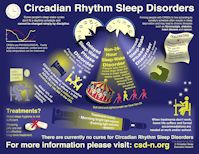 Former board member and artist Lily Style has created an infographic describing Circadian Rhythm Sleep Disorders. View it in your browser at www.circadiansleepdisorders.org/docs/CRSDGraphic.php. Feel free to repost the graphic to help raise awareness.
You can print it directly from your browser (we suggest making the browser window full screen - the image will resize). We are also posting JPG images in various proportions for printing directly on different sizes of paper:
You can download these (in Microsoft Windows, right-click and select Save As). To print in Microsoft Windows, right-click on the downloaded file (in File Explorer) and select Print. Or open it in a photo- or image-processing program to use that program's features such as borderless printing.
 We are offering merchandise (mugs, T-shirts, tote bags, bumper stickers, and a messenger bag) with our name and logo through CafePress,
at
We are offering merchandise (mugs, T-shirts, tote bags, bumper stickers, and a messenger bag) with our name and logo through CafePress,
at
www.cafepress.com/circadiansleepdisordersnetwork. (Note: if you just search CafePress you will find this merchandise, but at a higher price!)
Circadian Sleep Disorders Network is a Coalition Partner of Start School Later. We understand only too well the difficulties many teens have with early school start time, and we support the move to start school later.
This is a list of refences added to our Info page since the last newsletter. The newsletter lists references added since the previous newsletter. These are generally available to members only.
This web site is intended to provide generic information about Circadian Rhythm Sleep Disorders, and
is not intended to replace discussions with a healthcare provider.
You should not use the information on this website for diagnosing or treating a medical or health condition.
All decisions regarding patient care should be made with your healthcare provider.
Contact:
Email:
Office: 4619 Woodfield Rd, Bethesda, MD 20814
Phone: By appointment only, please.
browser: Mozilla/5.0 AppleWebKit/537.36 (KHTML, like Gecko; compatible; ClaudeBot/1.0; +claudebot@anthropic.com)
PHP version 7.3.33